— The Complex
World-Class
Infrastructure.
Every environment mirrors the complexity of modern operational theaters. Every square foot built for realism.
Open Photo Gallery →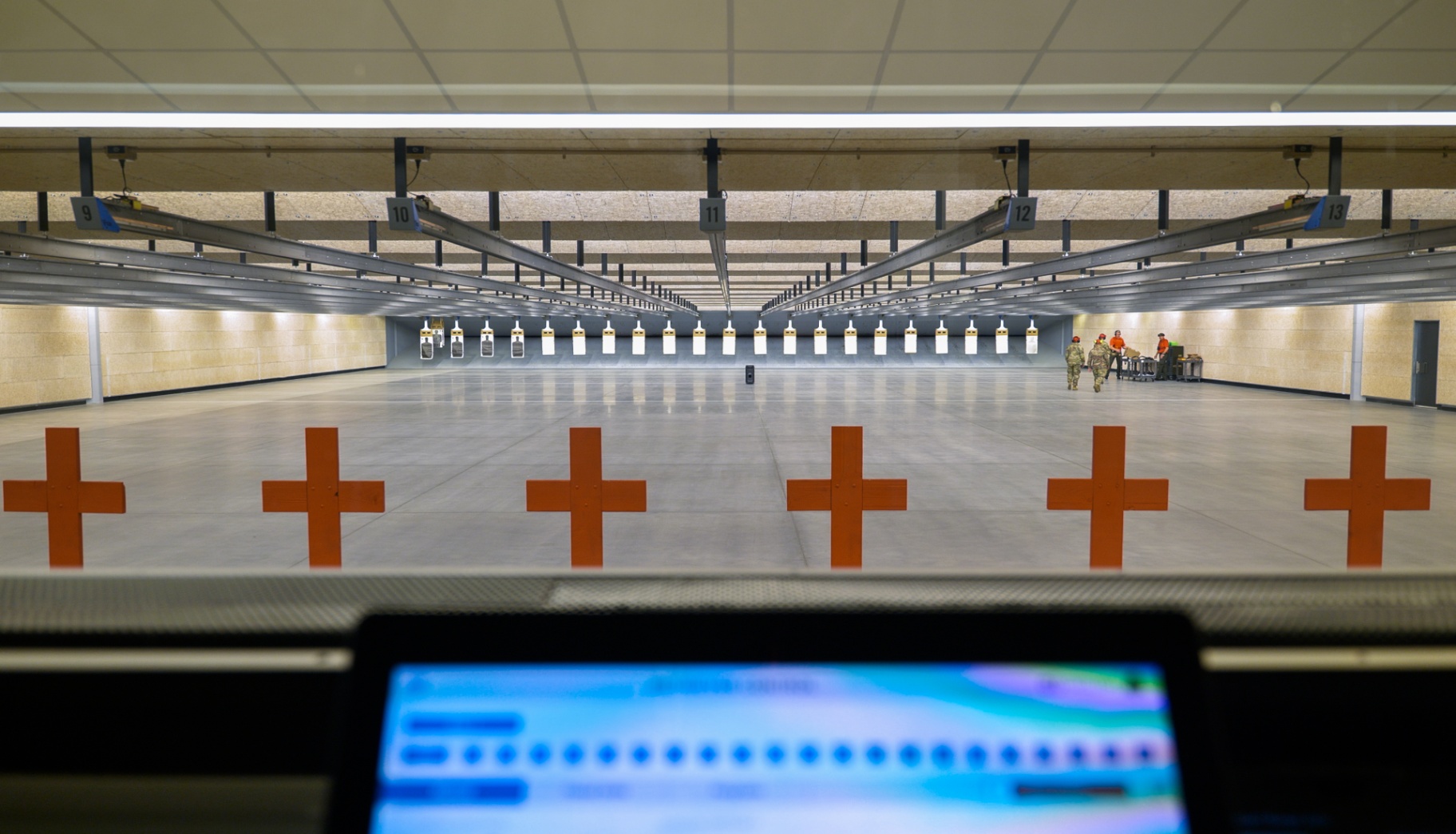
21-Lane, 50-Meter Indoor Range
Programmable electronic targetry, HEPA-filtered ventilation, and calibers up to .50 BMG. Individual lane control for scenario stages.
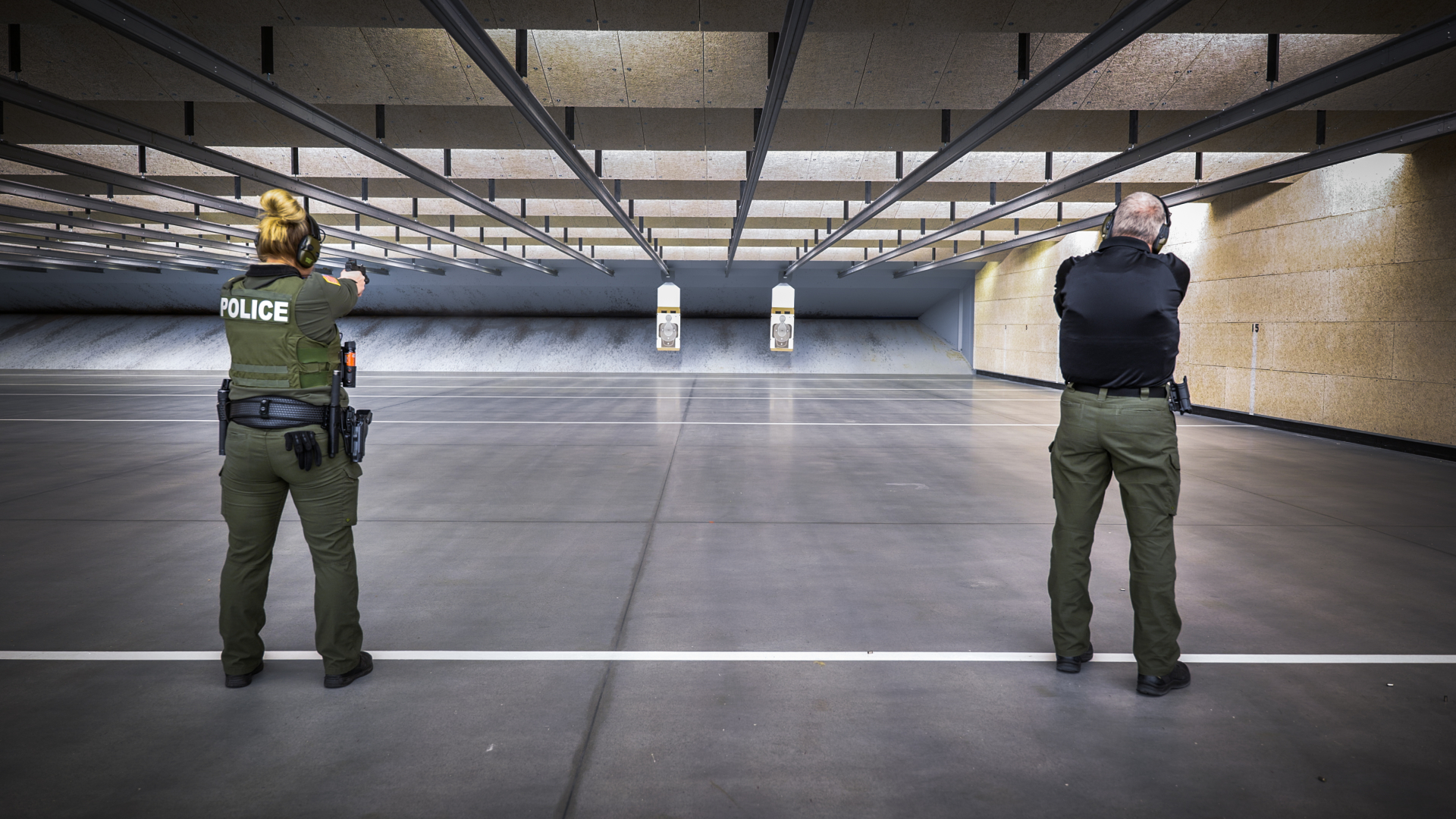
Live-Fire Bays
Full 50-meter lit bays for pistol, carbine, shotgun, and patrol rifle qualification. Range has ability to be lit, dark or simulate patrol red and blue lighting.
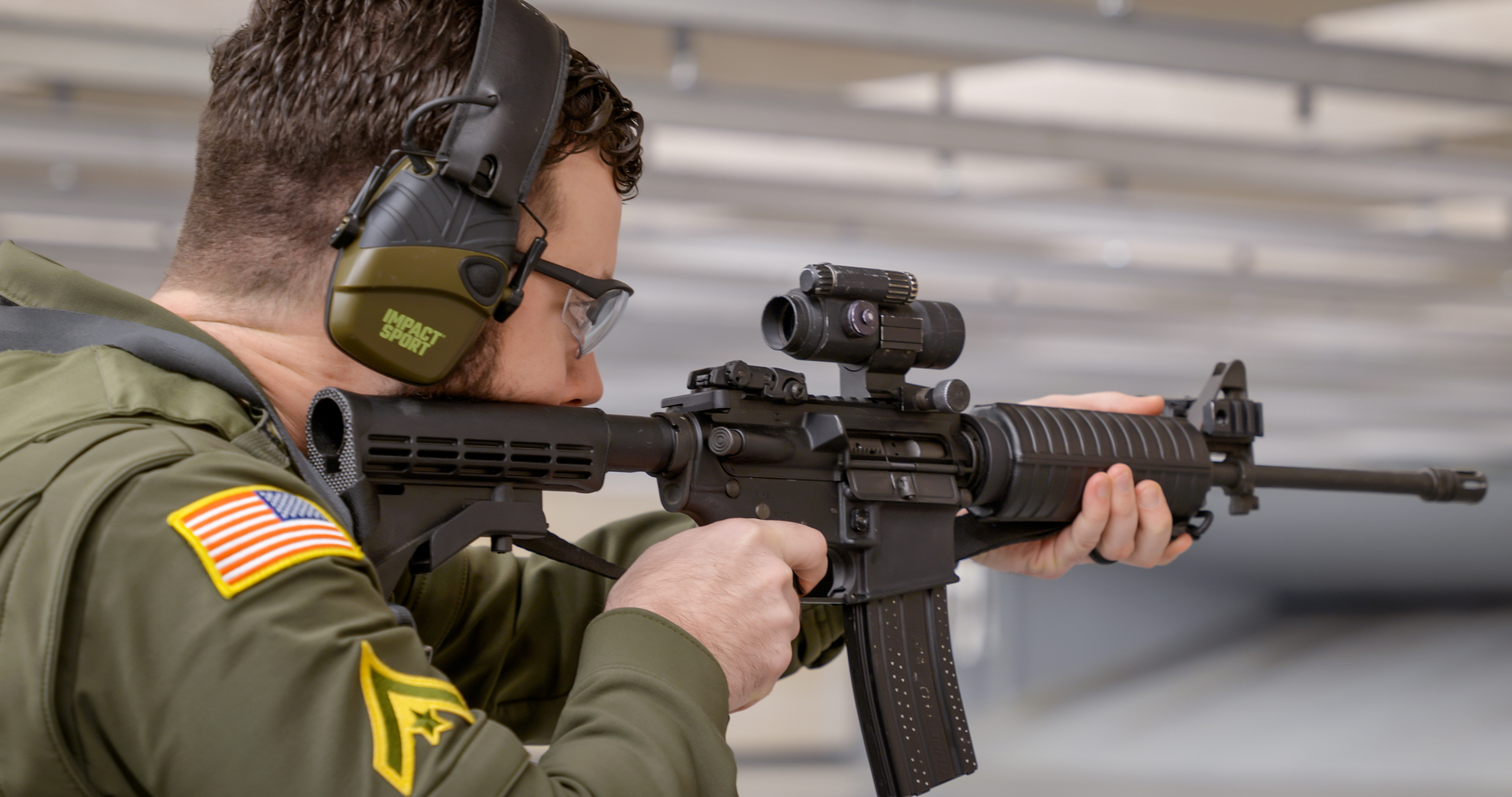
Patrol-Rifle Qualification
M4-platform qualification with red-dot and iron-sight courses of fire. Deputies zero, transition, and run reload drills under a POST-certified rifle instructor.
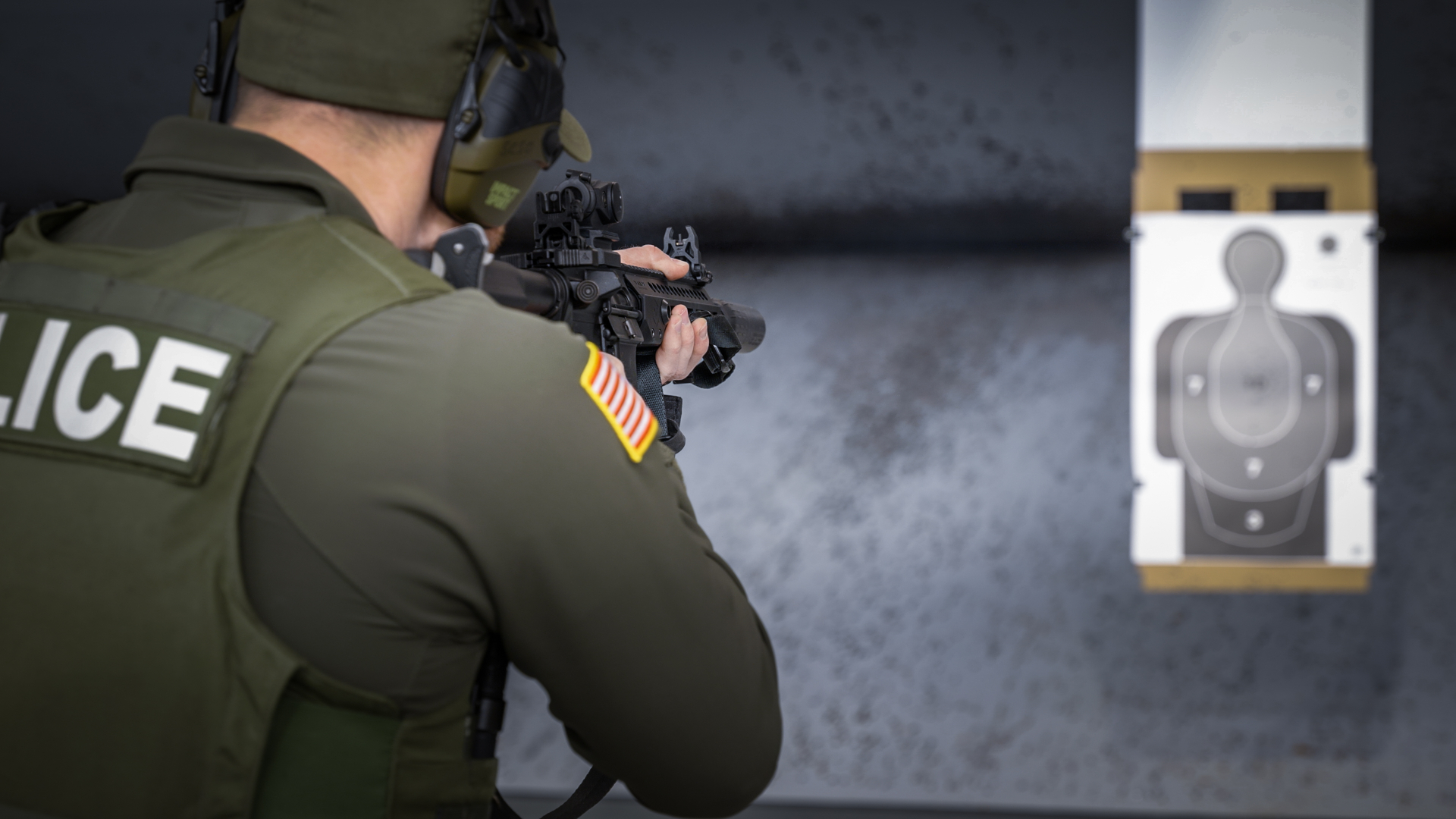
Carbine & Suppressor Ready
Rated for 5.56 and suppressed platforms. Reactive steel and paper alike — every course of fire captured on lane cameras for after-action review.
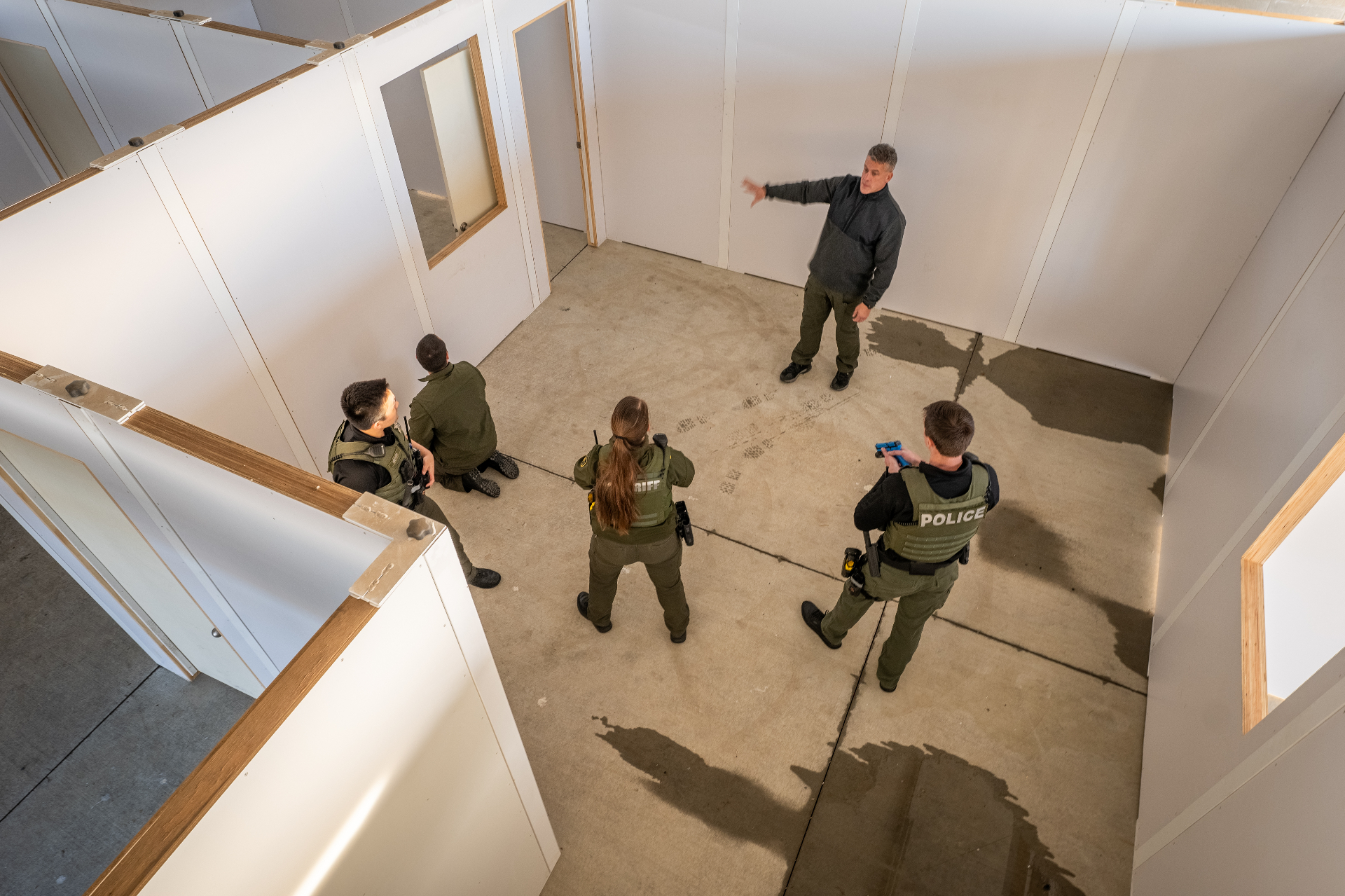
Reality-Based Training UTM/SIM Capable Buildings
Reconfigurable ballistic-curtain rooms let instructors rebuild the floor plan for every scenario — knock-and-announce, high-risk warrant service, hostage rescue. No two runs identical.
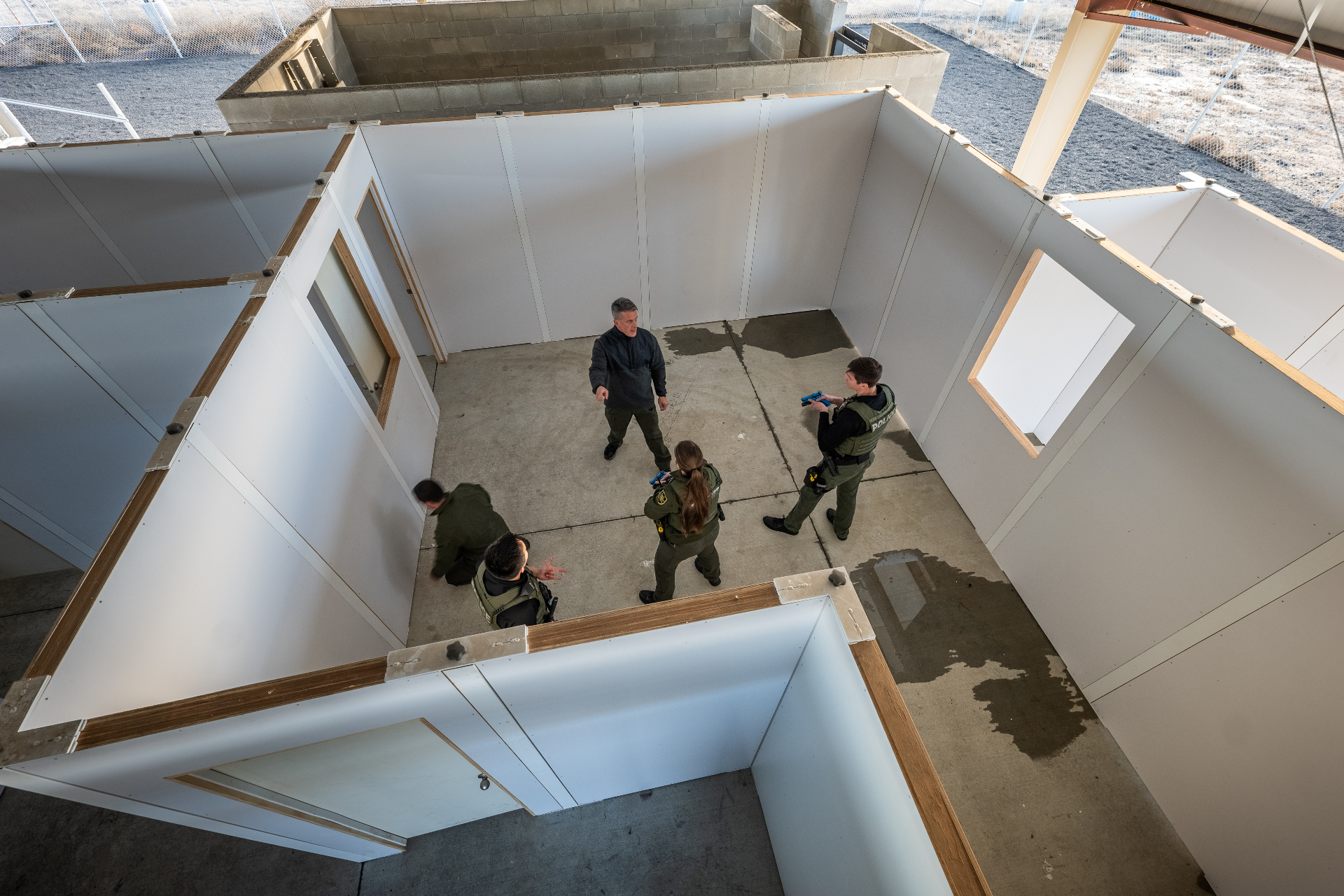
Instructor-Led Scenario Debrief
An overhead catwalk lets instructors watch every step of the entry from above, then step down onto the floor for real-time coaching between reps.
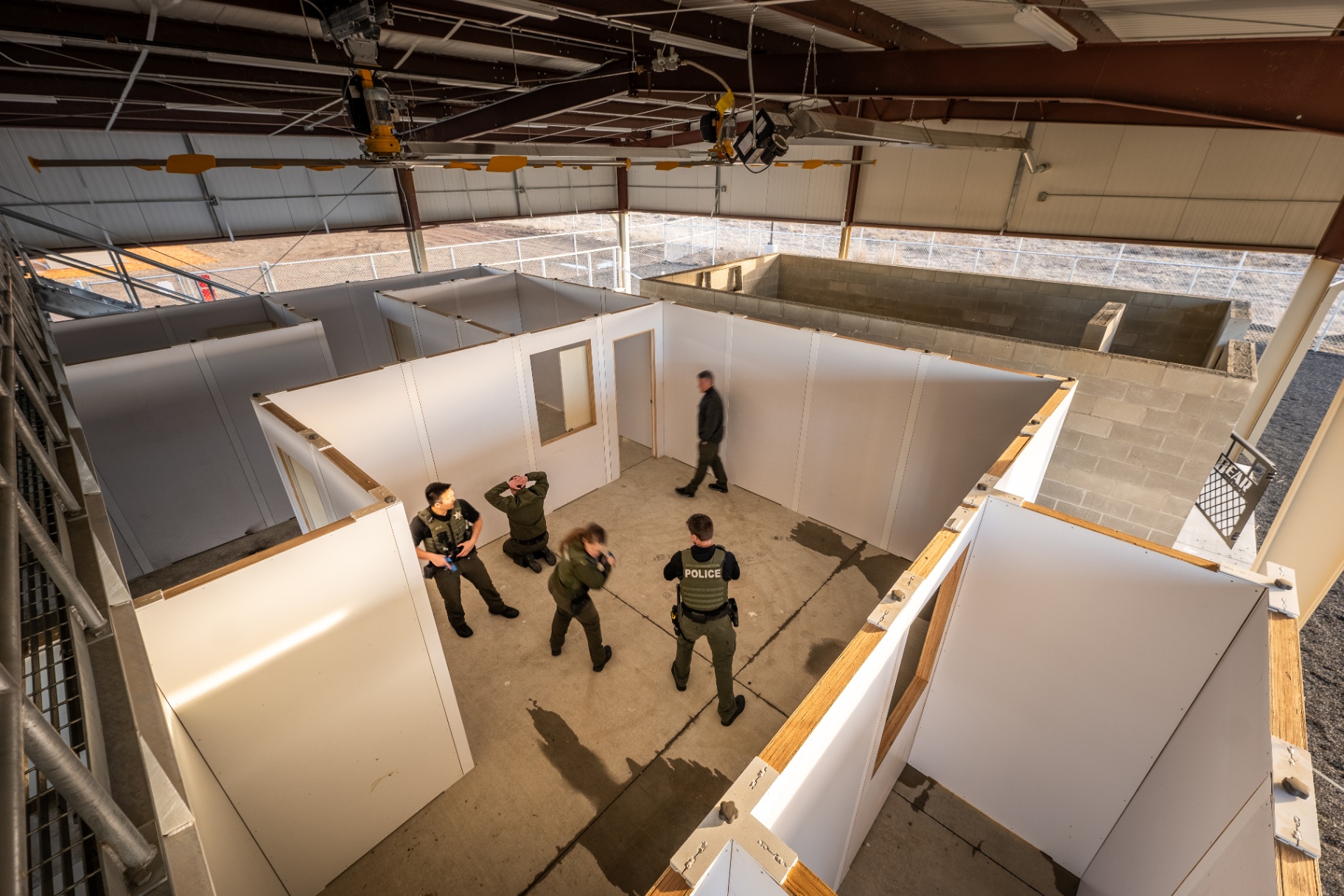
Reconfigurable Scenario Village
The aerial view of the RBT complex — a full modular maze of rooms, halls, and blind corners under an open-air steel roof. Rebuilt between courses to break any pattern the last class learned.
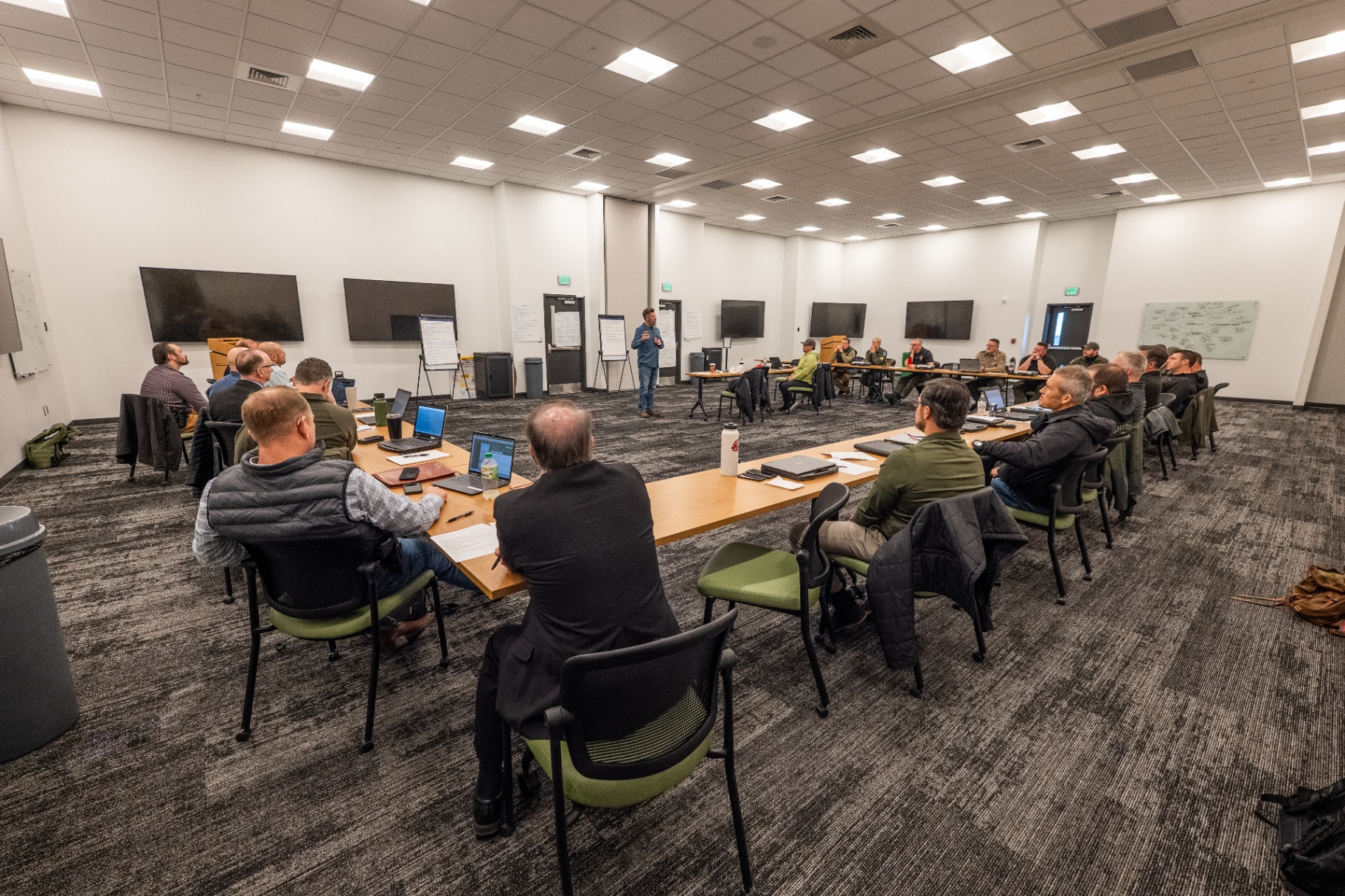
Multipurpose Classrooms
Divisible auditorium seats over a hundred for regional in-service, or splits into three focused rooms for K9, EVOC, and detective courses running in parallel.
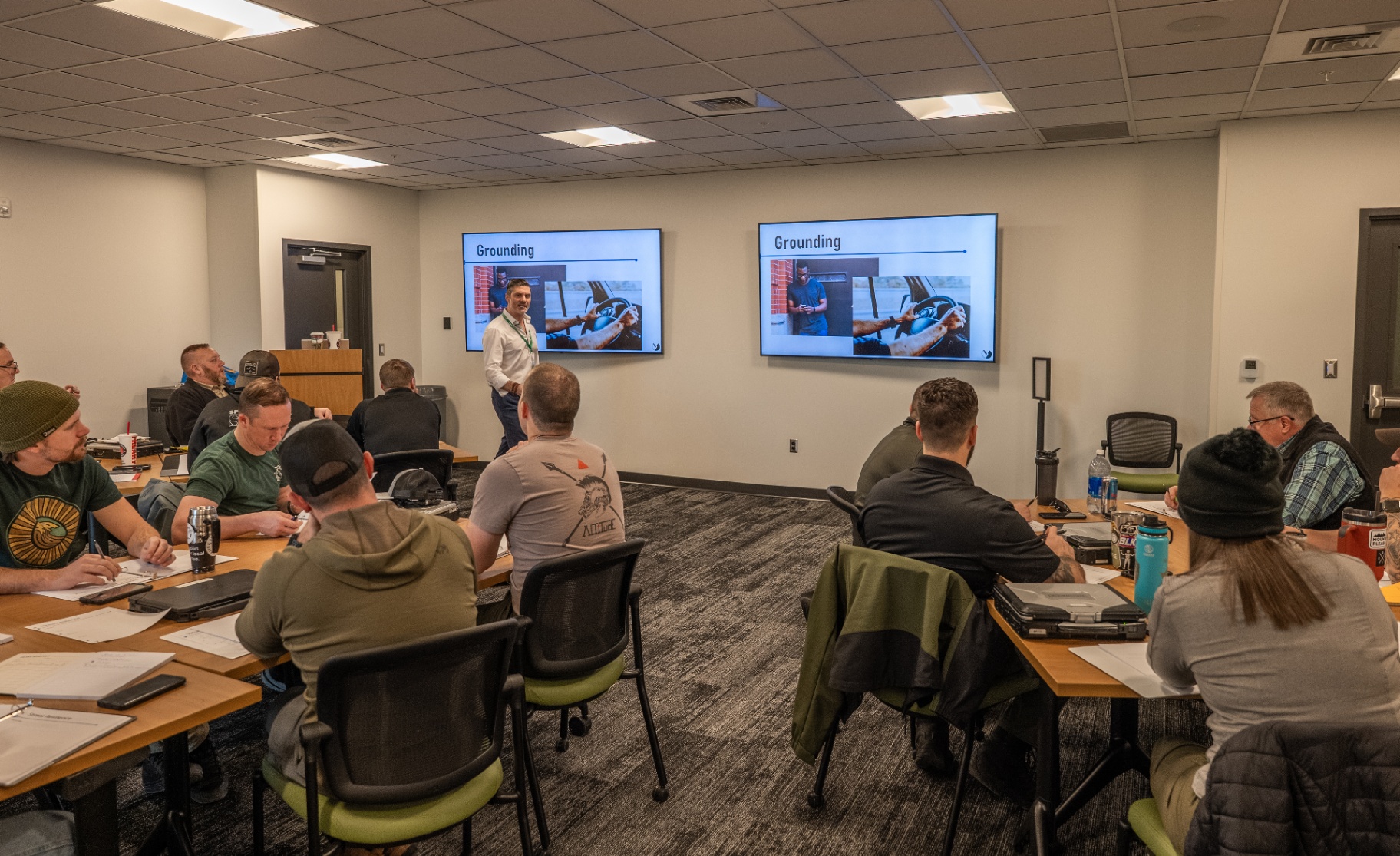
Dual-Screen Training Rooms
Purpose-built rooms with paired 4K displays so every seat has a clear read on the slide deck, body-cam review, or force-science footage under discussion.
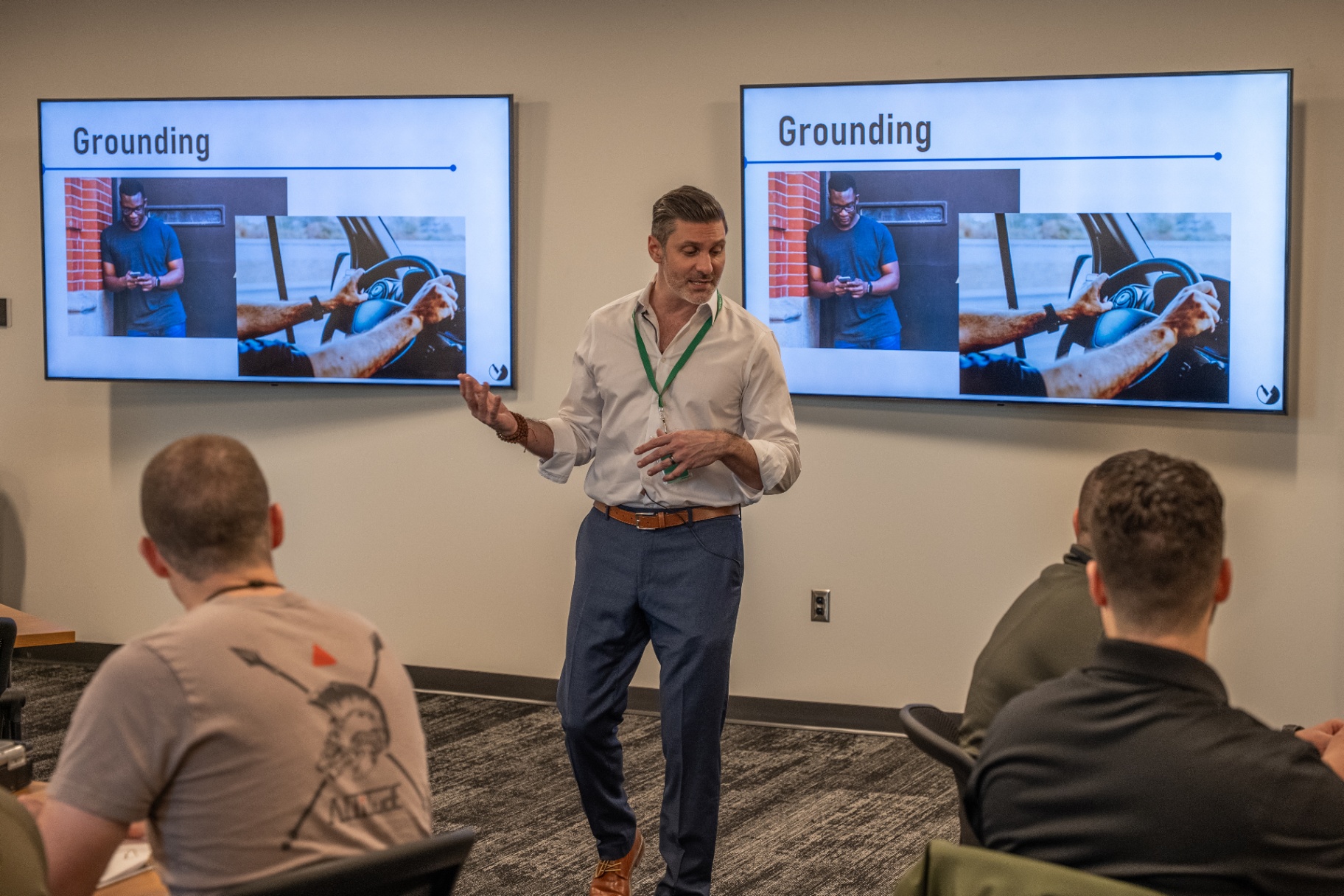
Officer Wellness & Behavioral Health
Dedicated space for peer-support, critical-incident stress, and de-escalation instruction — grounding, resilience, and mental-health first-aid built into the training calendar.
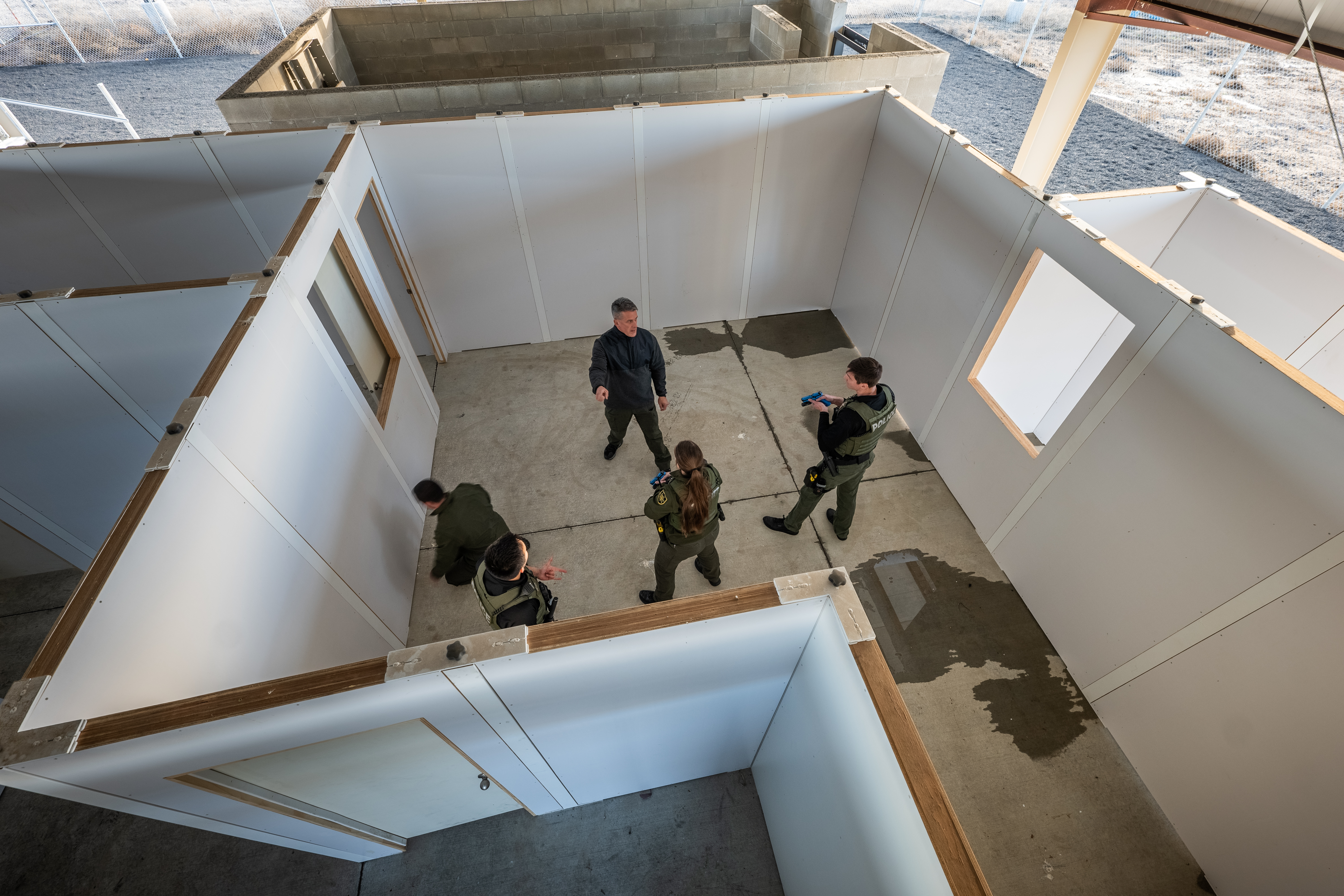
Modular Outdoor UTM/Sim Shoot House (RBT/UTM only)
Full-scale exterior shoot house with movable interior walls. Deputies breach doors and windows from open ground — the same cold-air, natural-light problem set they'll face on a real callout.
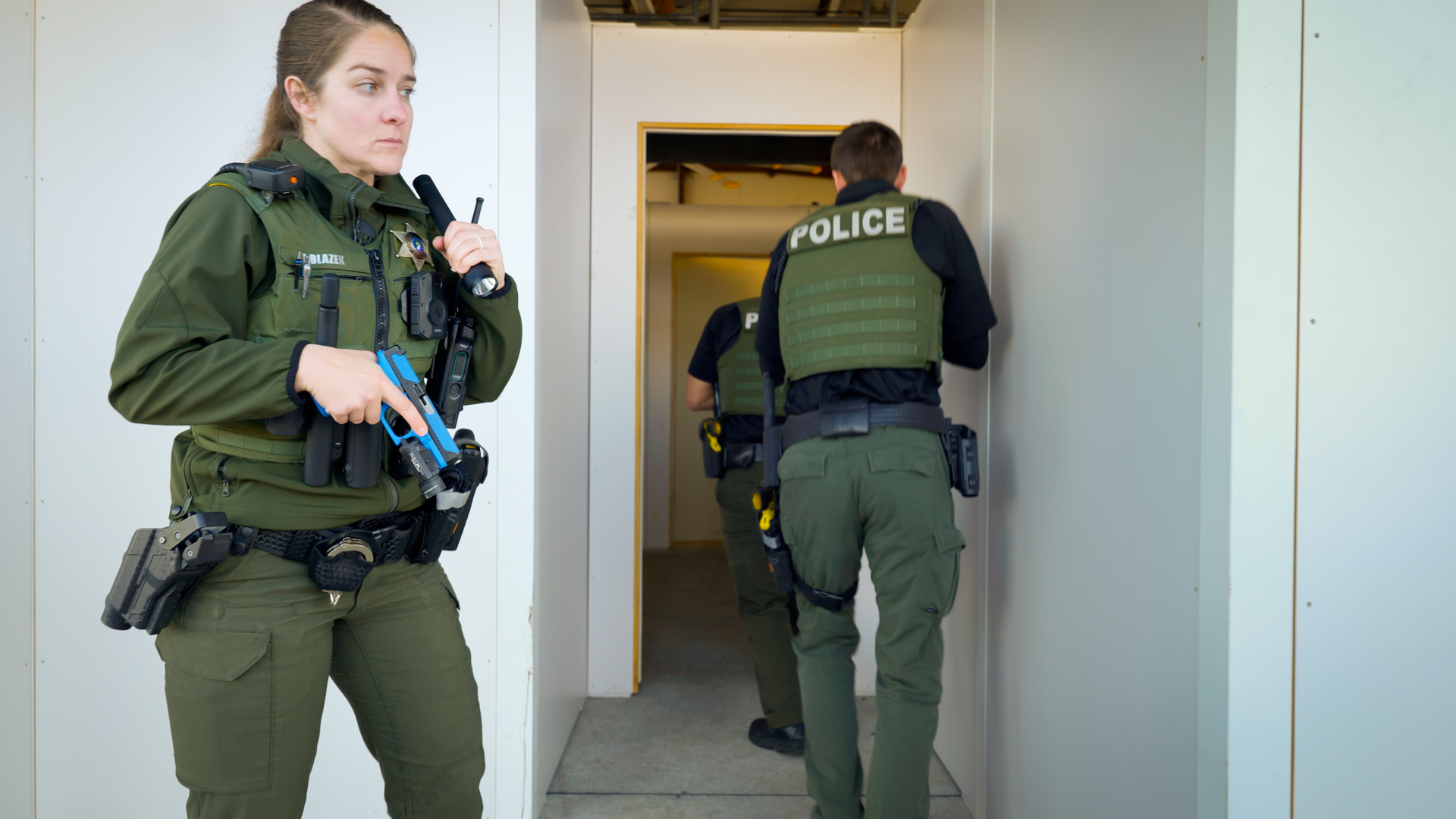
Force-on-Force Bays
Dedicated bays for UTM and Sim rounds. Officers move through cleared, purpose-built spaces to rehearse contact-cover, room clearing, and de-escalation under stress.
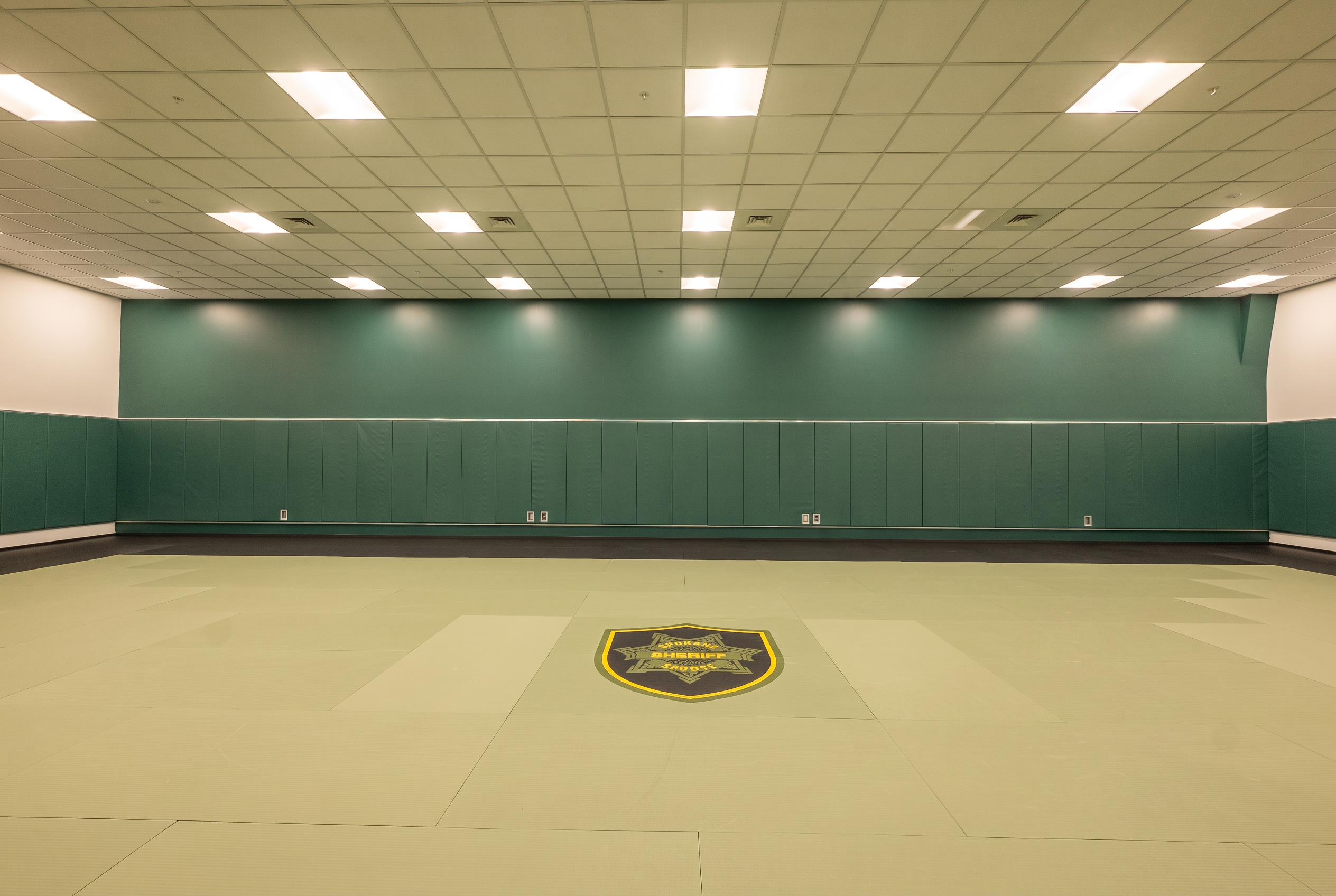
Defensive Tactics Mat Room
Padded green-wall mat room sized for full-contact ground work, arrest and control, and Krav-style striking. Instructors run recruits through the full DT curriculum without ever leaving the building.
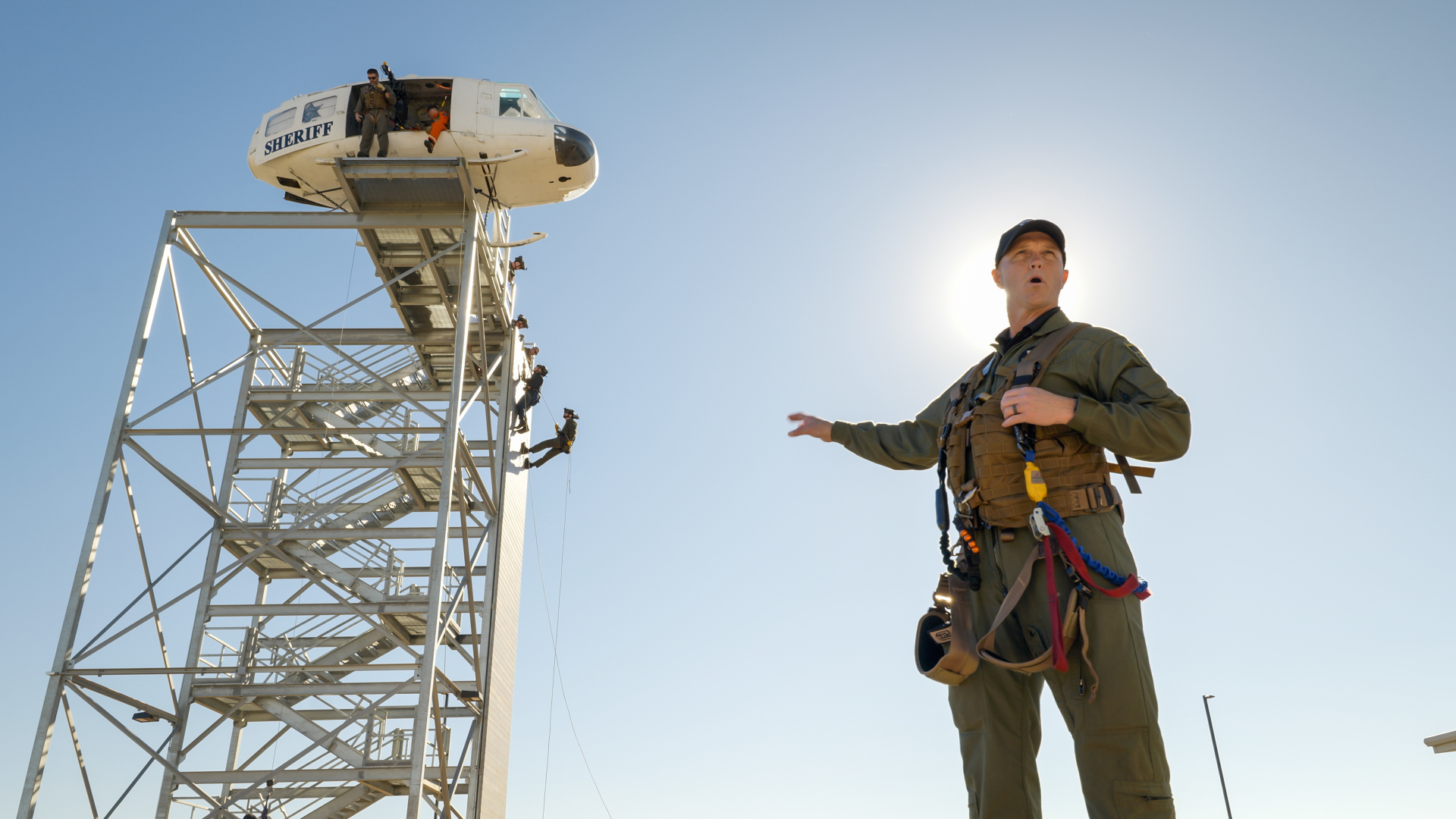
Rescue Tower Rappel Ops
Deputies rehearse rappel entries and rescue rigging directly off the tower deck — steel-face descents on a controlled anchor line.
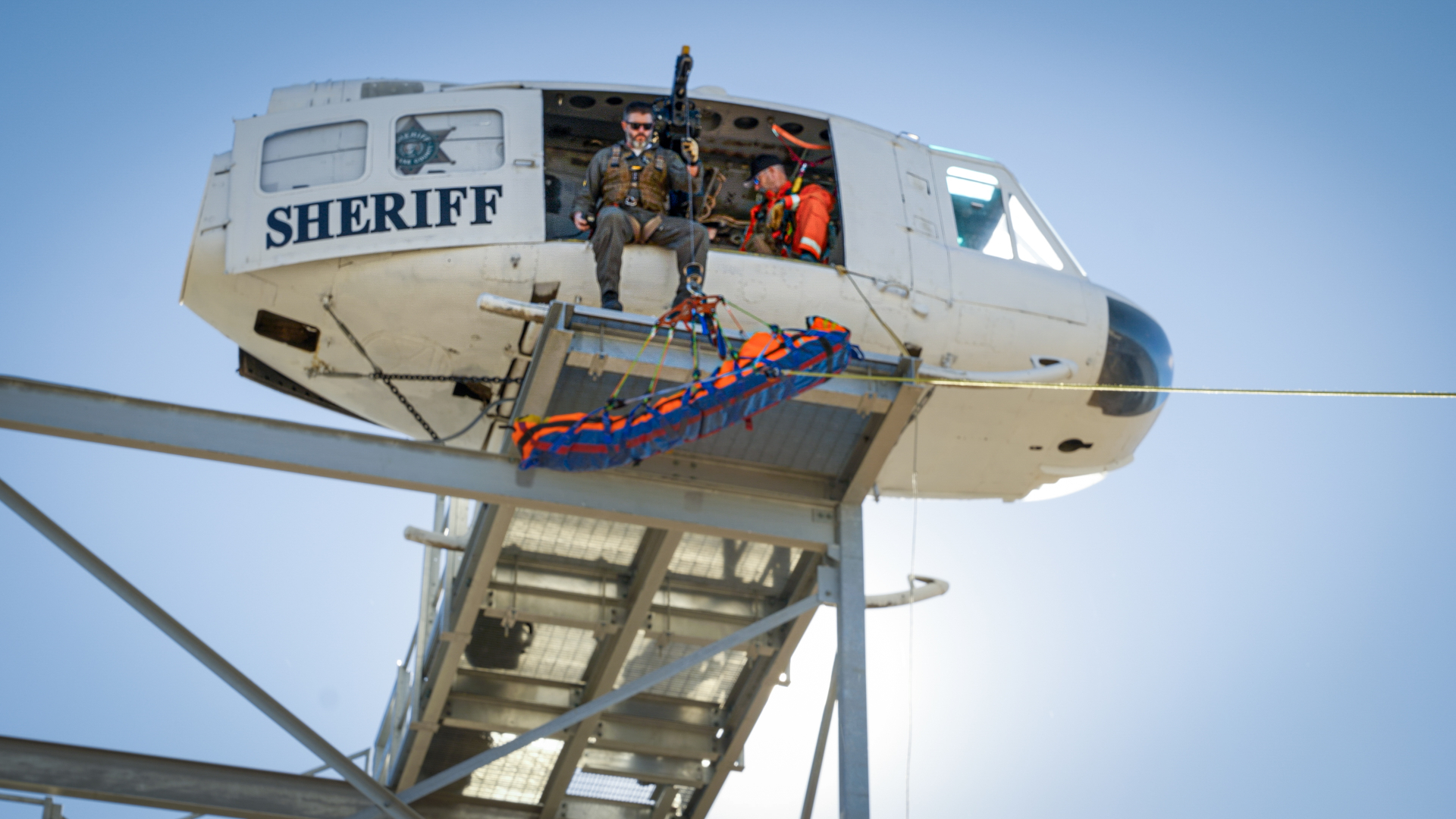
Helicopter Rescue Tower
A decommissioned Sheriff Huey mounted on a five-story steel tower — hoist rehearsals, litter extractions, and short-haul rigging without ever spinning up an airframe.
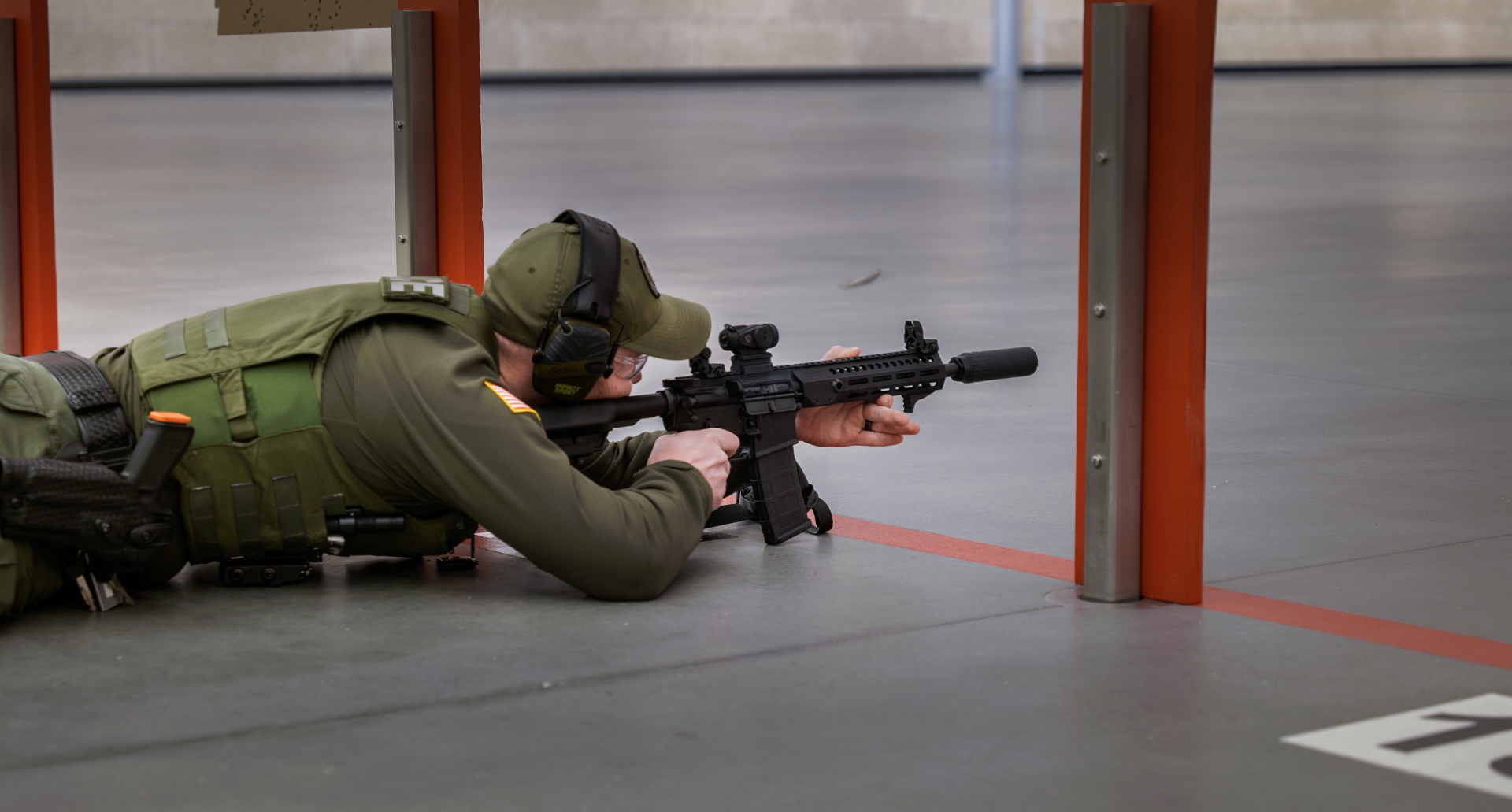
Barricade & Prone Stages
Fixed cover positions, orange VTAC barricades, and low-line firing ports let deputies rehearse the awkward positions real callouts demand.
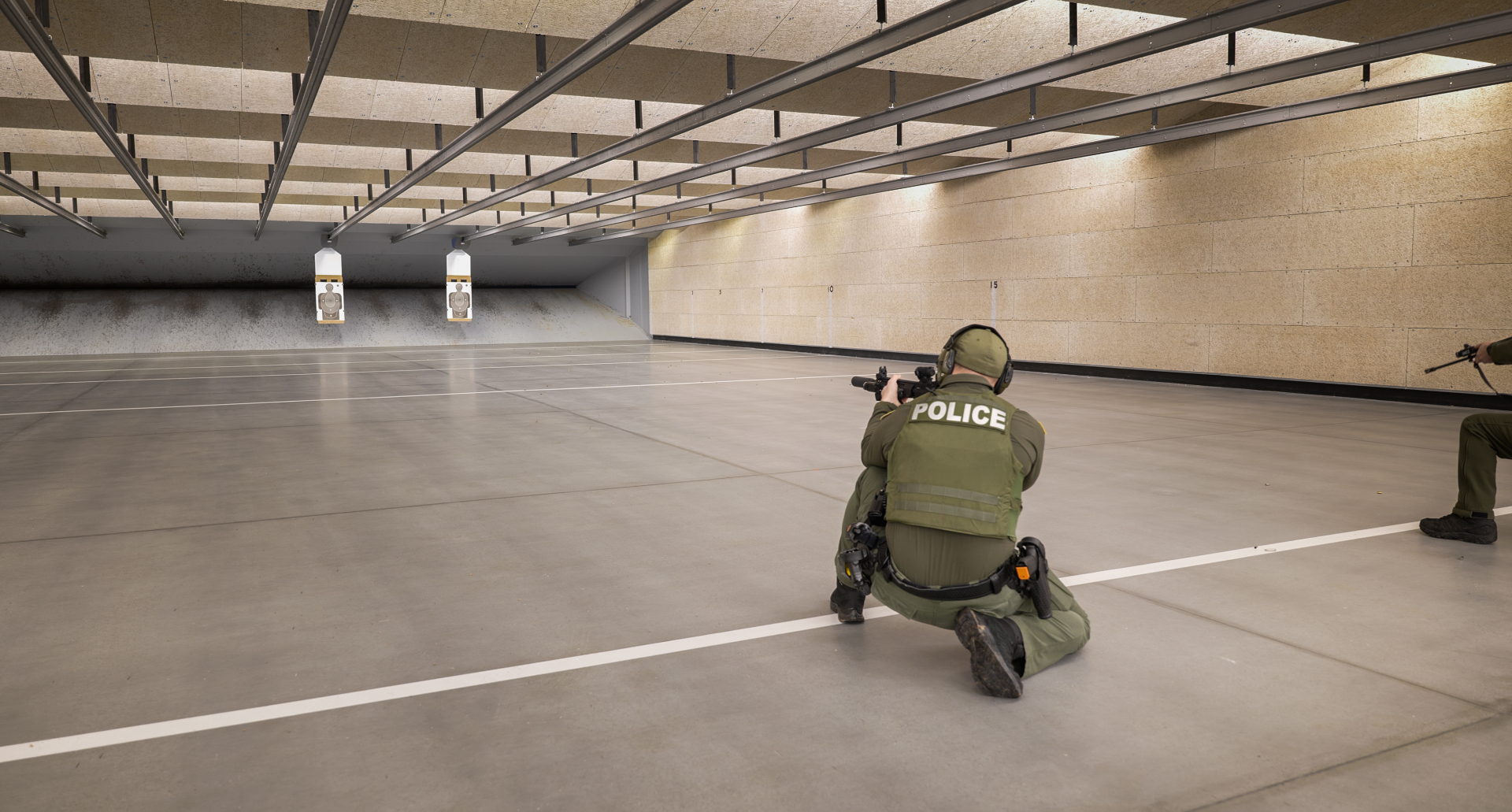
Low-Light & Kneeling Drills
Programmable lighting drops the bay to near-dark for weapon-mounted light work, transitions, and reduced-visibility engagements.
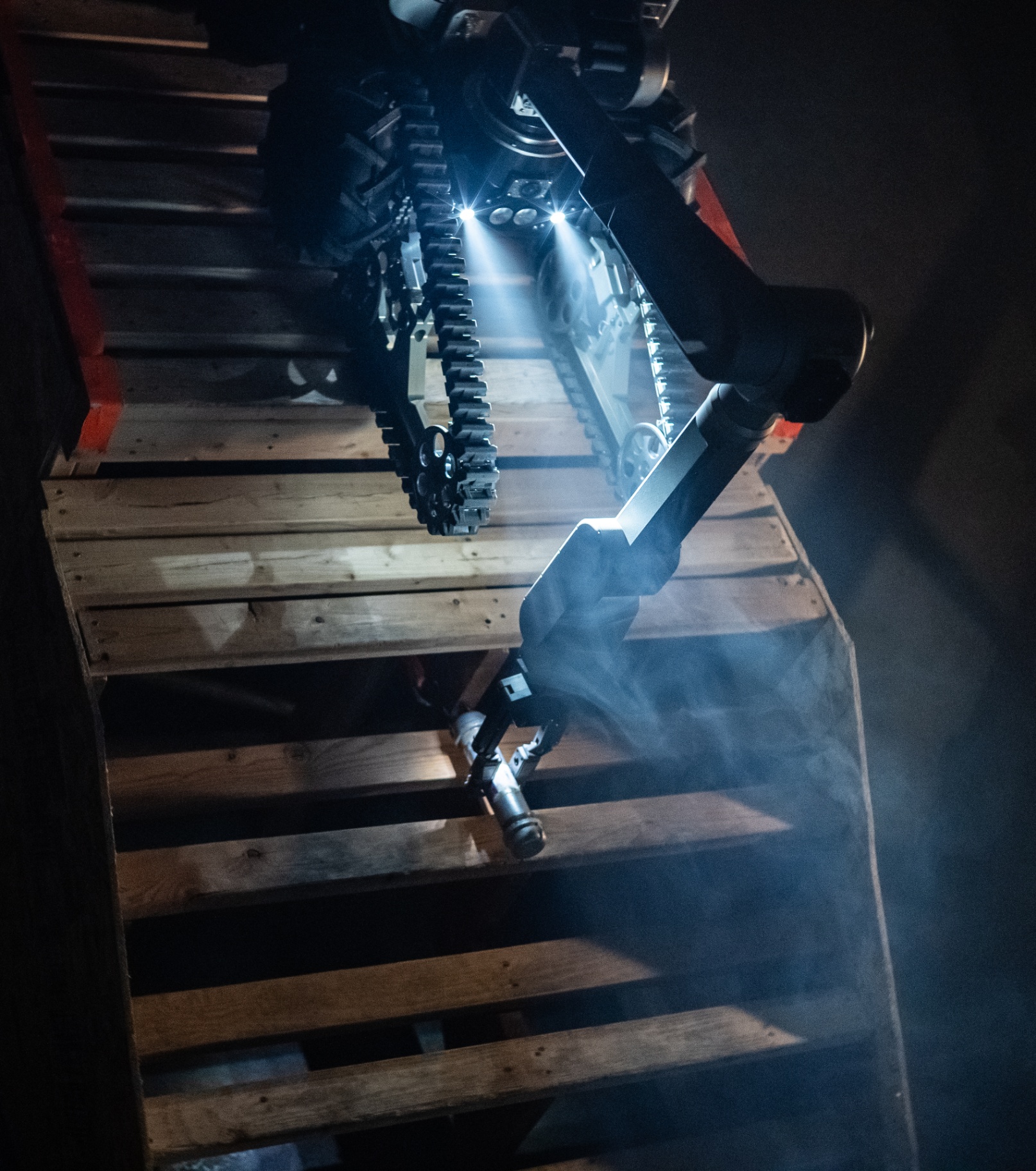
Tactical Robotics Bay
SWAT and EDU teams rehearse with tracked reconnaissance robots — stair climbs, breach approaches, and hazardous-space clearing before ever committing an officer.
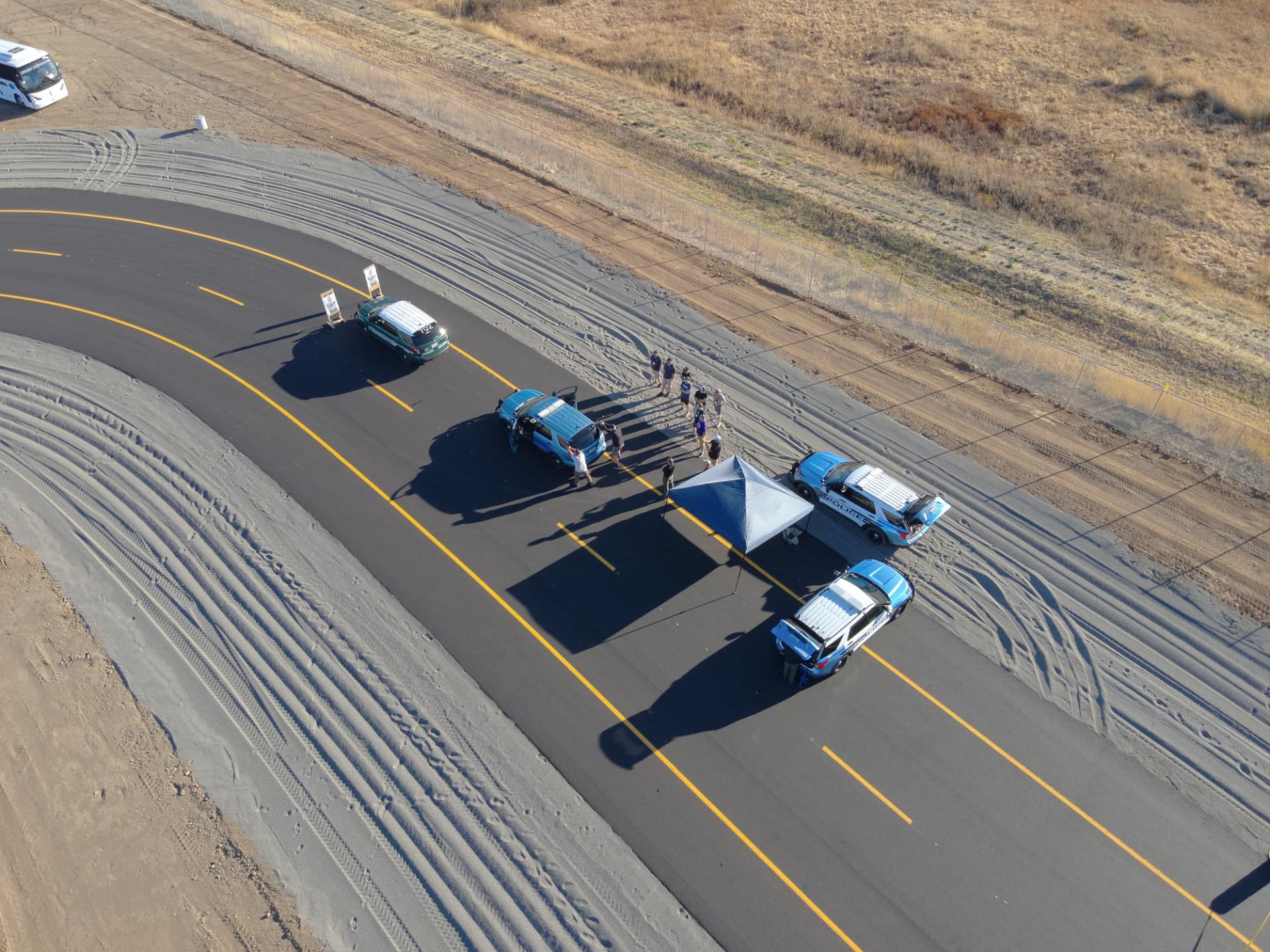
EVOC High-Speed Track
Full closed-course driving pad. Precision handling, PIT maneuvers, controlled-skid recovery, and pursuit intervention.
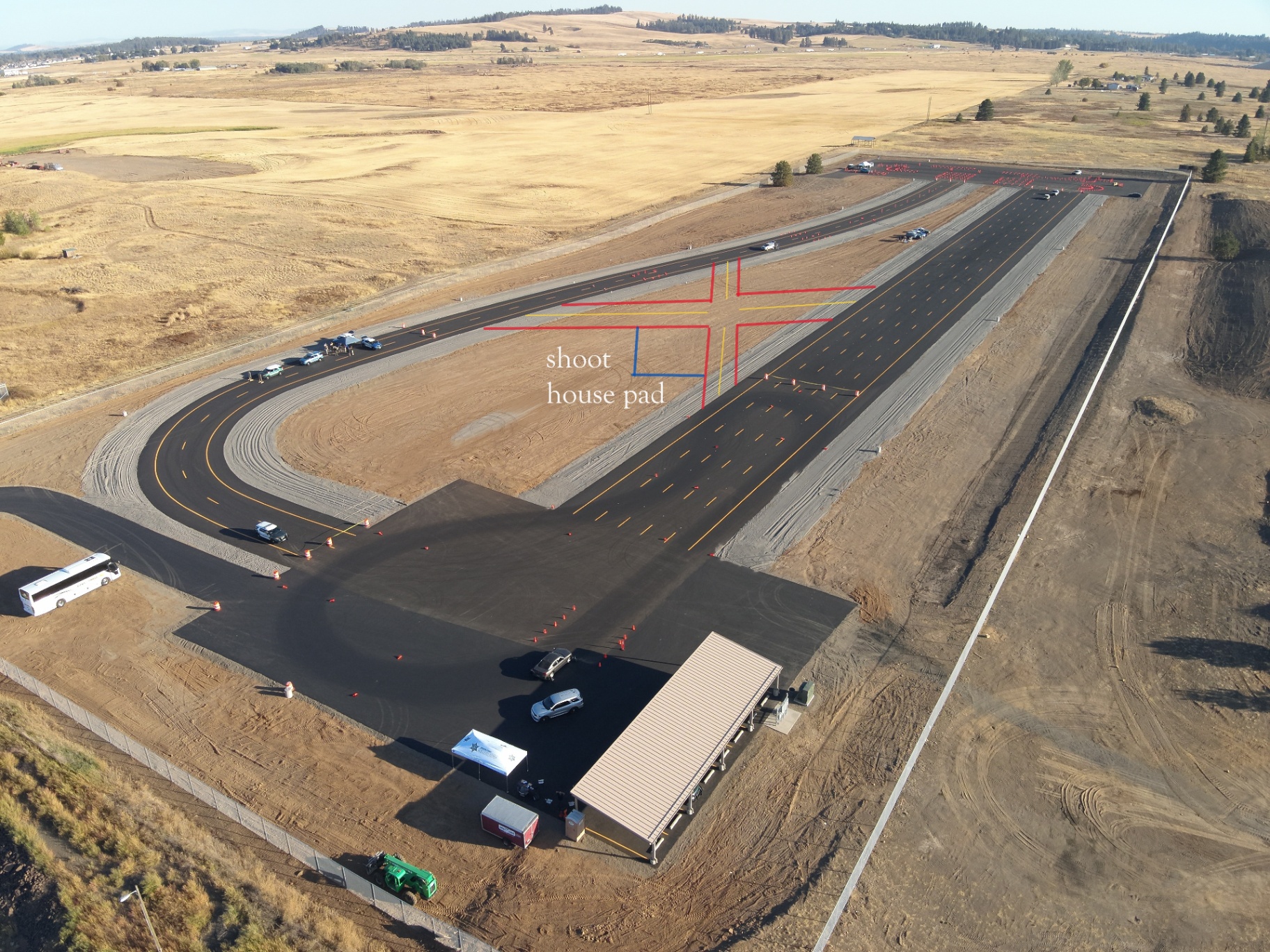
EVOC Intersection & Future Growth Pad
Aerial view of the EVOC complex — dedicated intersection stage and high-speed straightaway. There is no shoot-house on the EVOC track; the SCSO is planning for future growth with a UTM/Sim shoot house and intersection.
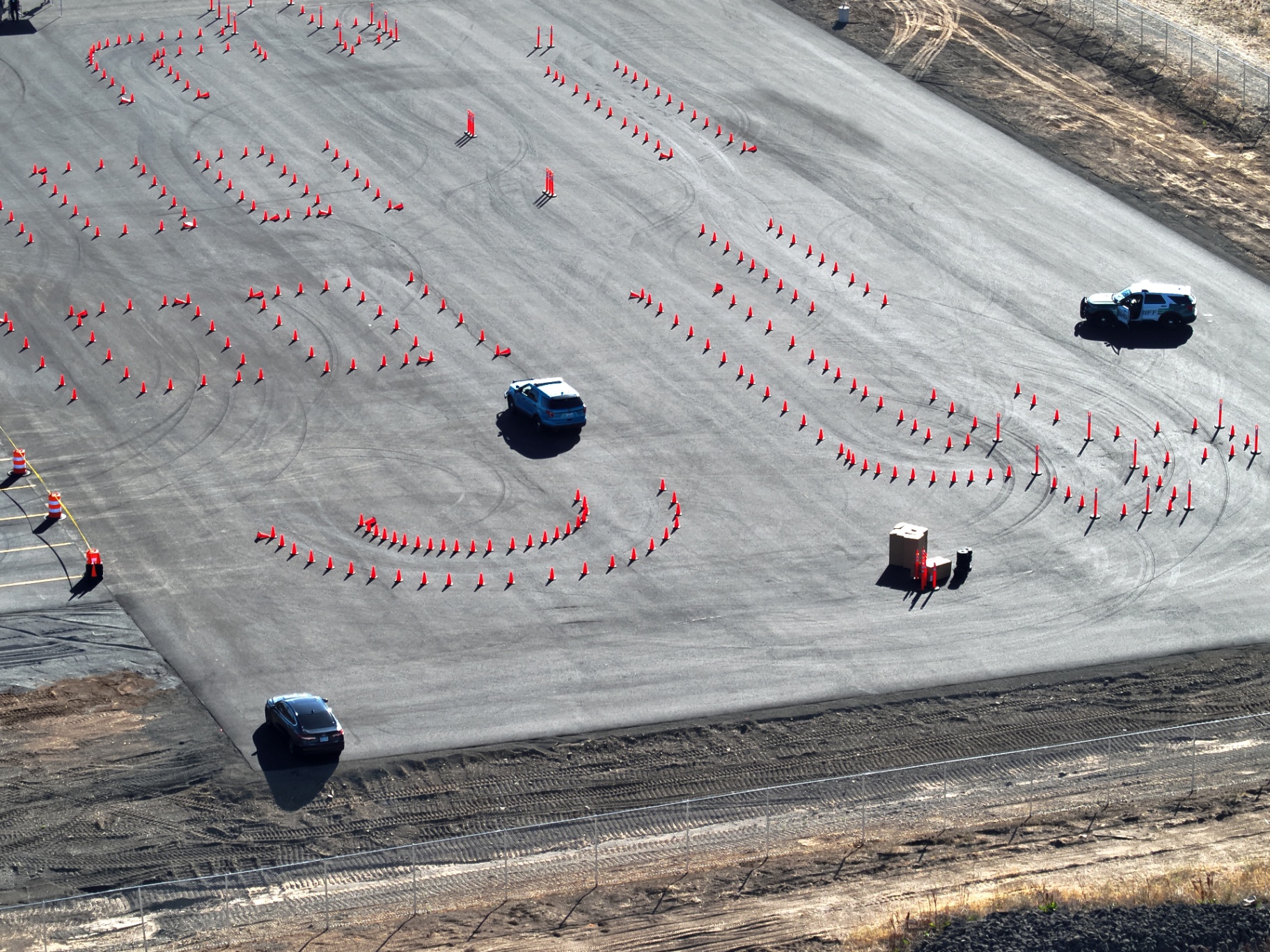
EVOC Cone Course & Precision Driving
EVOC track for cars, SUVs, and motorcycles, high-speed or slow and backing courses.
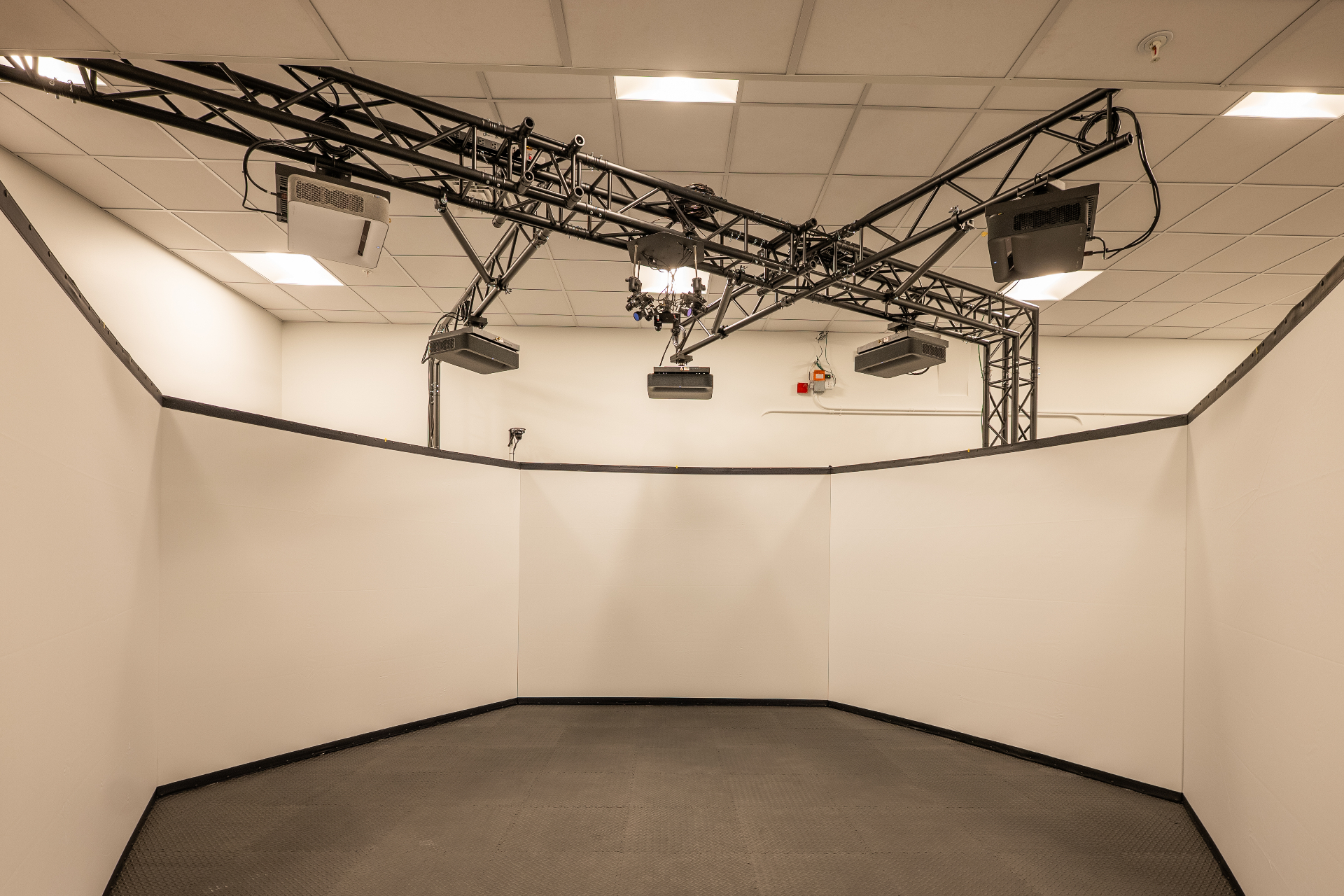
VirTra 300° Simulator Bay
Purpose-built five-screen simulator room — programmable ambient lighting, overhead truss, and calibrated projectors surround the officer for a true 300° decision environment.
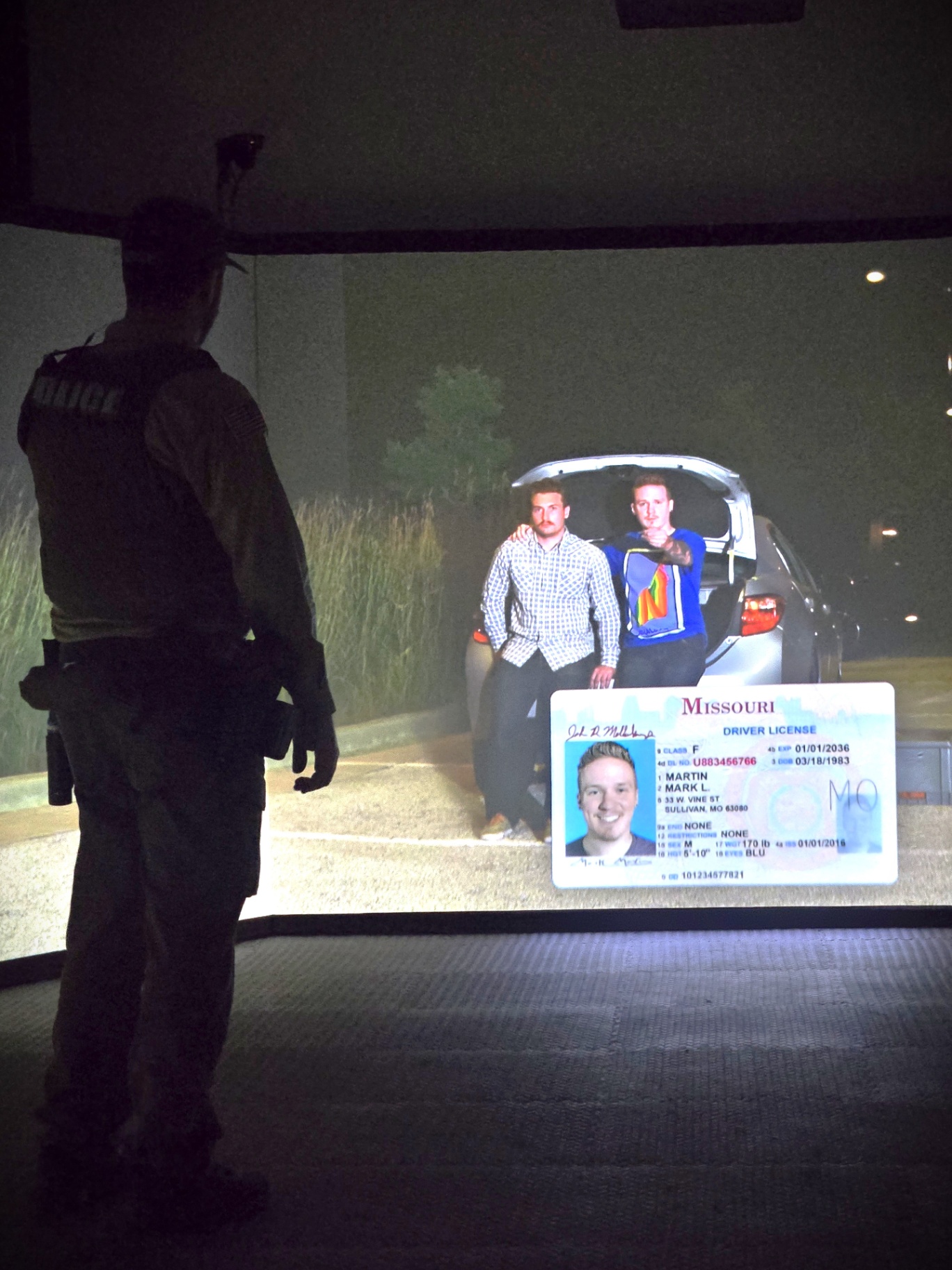
VirTra 300° Live Scenarios
Real footage projected around the officer — traffic stops, mental-health crises, active-threat calls. Every decision recorded for instructor-led debrief.
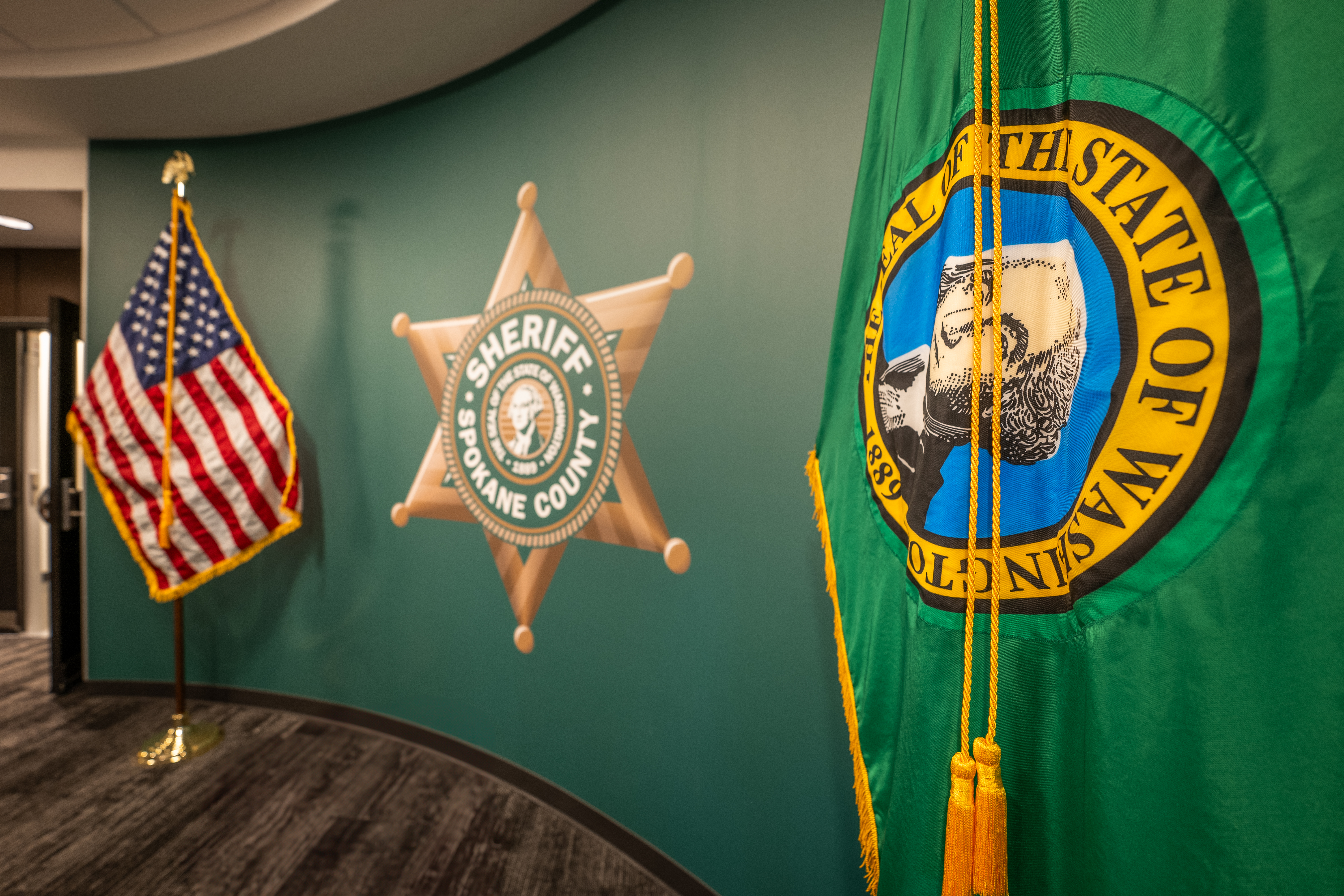
Public Safety Lobby
The first thing every recruit, instructor, and partner-agency officer walks past — the Spokane County Sheriff seal flanked by the colors. A quiet reminder of who this building was built for.
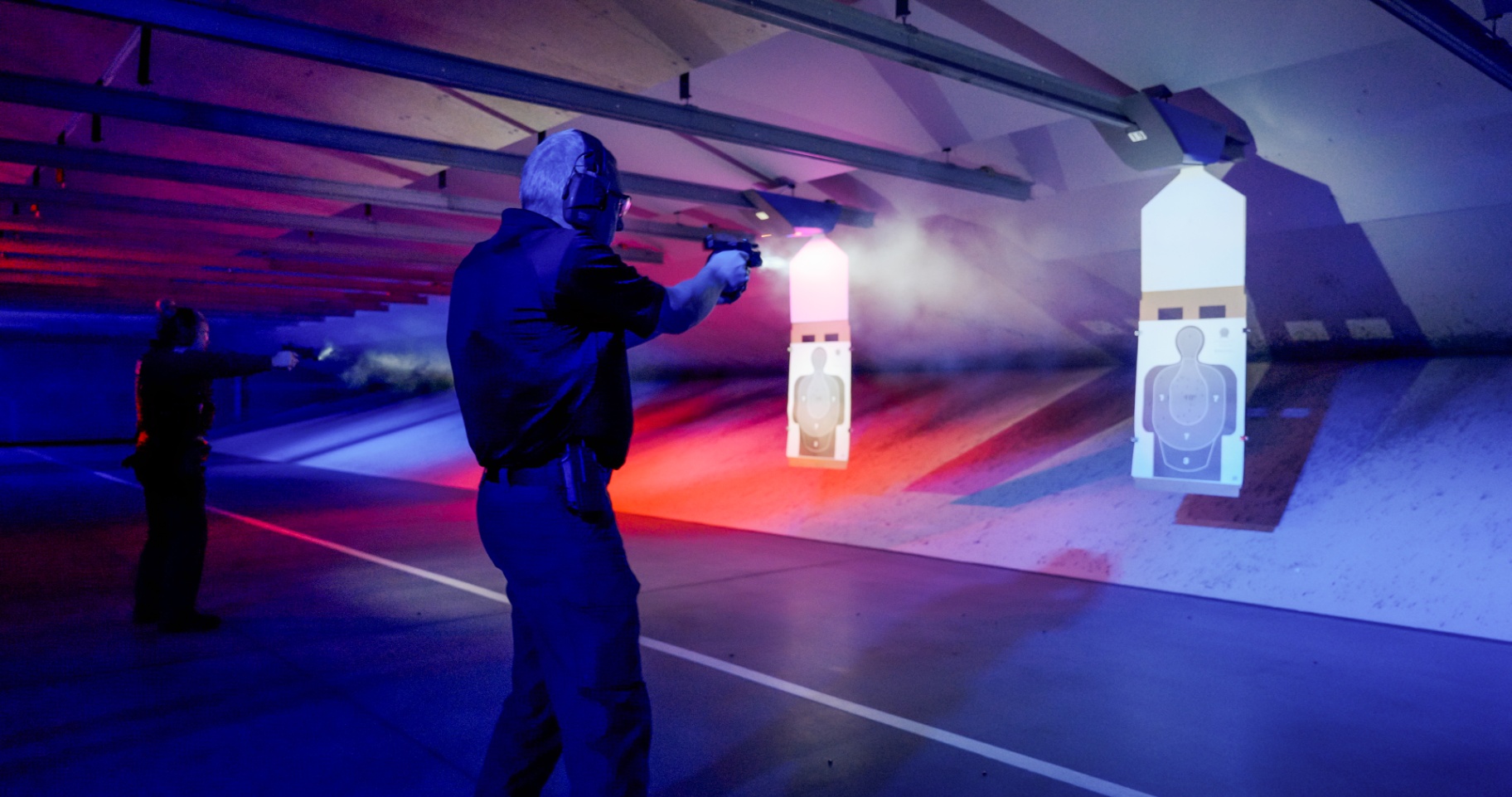
Lit Bay Marksmanship
The full-tone lit range: white light, deep shadow, and controlled contrast for iron-sight, red-dot, and pistol-light drills at any distance from 3 to 50 meters.